May:
Full Moon: May 1 and May 31,
New Moon: May 16
Two full moons this month. The first full moon on May 1 is known as the Flower Moon. The second full moon falls on May 30-31 and so will be a Blue Moon. A calendar-month Blue Moon happens when two full moons fall within a single calendar month. The time between one full moon and the next is close to the length of a calendar month. So the only time one month can have two full moons is when the first full moon happens in the first few days of the month. This happens every two to three years.
Planets: Jupiter shines bright in the west located in the constellation Gemini the Twins.
Constellations: Hydra the Sea Serpent, the the largest of the 88 constellations and stretches across, the southern sky, with Corvus the Crow and Crater the cup riding on the Serpents back. Bootes the Herdsman is high over head and Hercules is a bit to the East. Leo is now is the west.
Leo the Lion is a predominate sight for stargazers. Leo’s distinct forward sickle or “reverse question mark”, is easy to spot in the night sky. One way to locate Leo is to find the Big Dipper and imagine poking a hole in the bottom of the dipper. The water that would fall out of the dipper would fall onto the star Regulus, which is the bright star that makes the “period” of the reverse question mark.
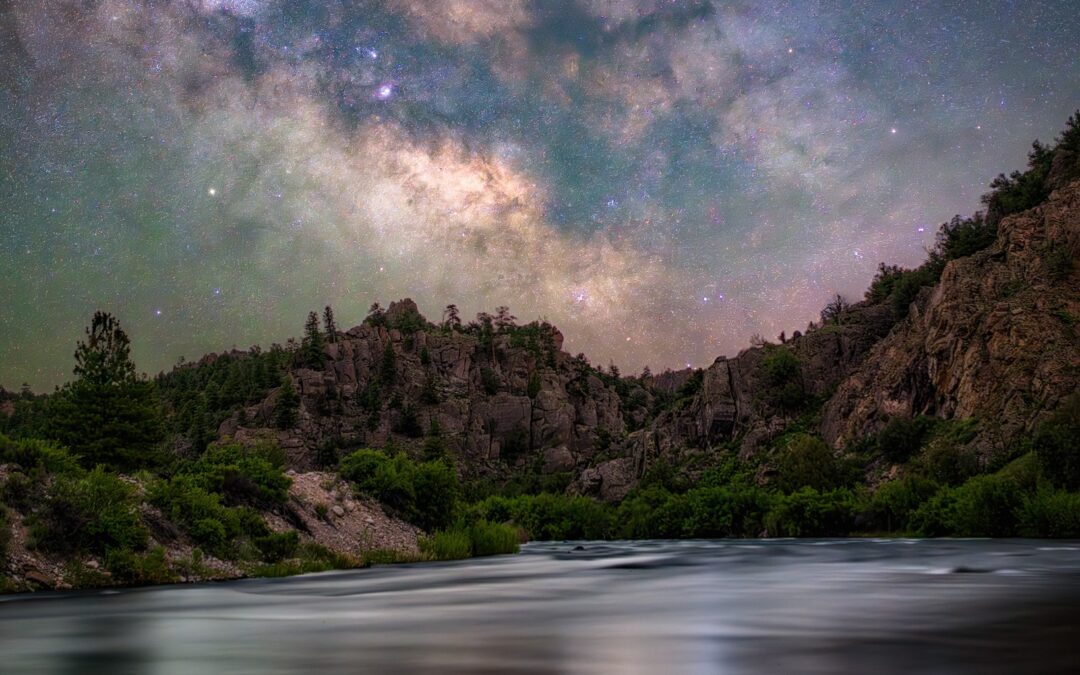
During normal viewing hours, 9:00 pm to 12:00 am, the Milky Way is in the west low to the horizon and very dim. If you are looking for the magical bright photograph of the Milky Way you will need to wait until approximately 2:00 am and look into the east.
Links:
Dark Sky International
https://darksky.org