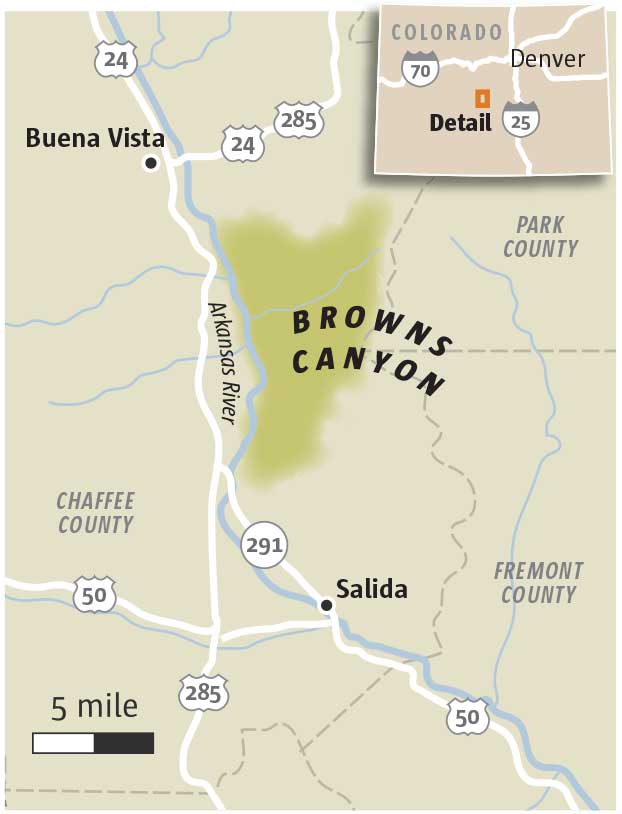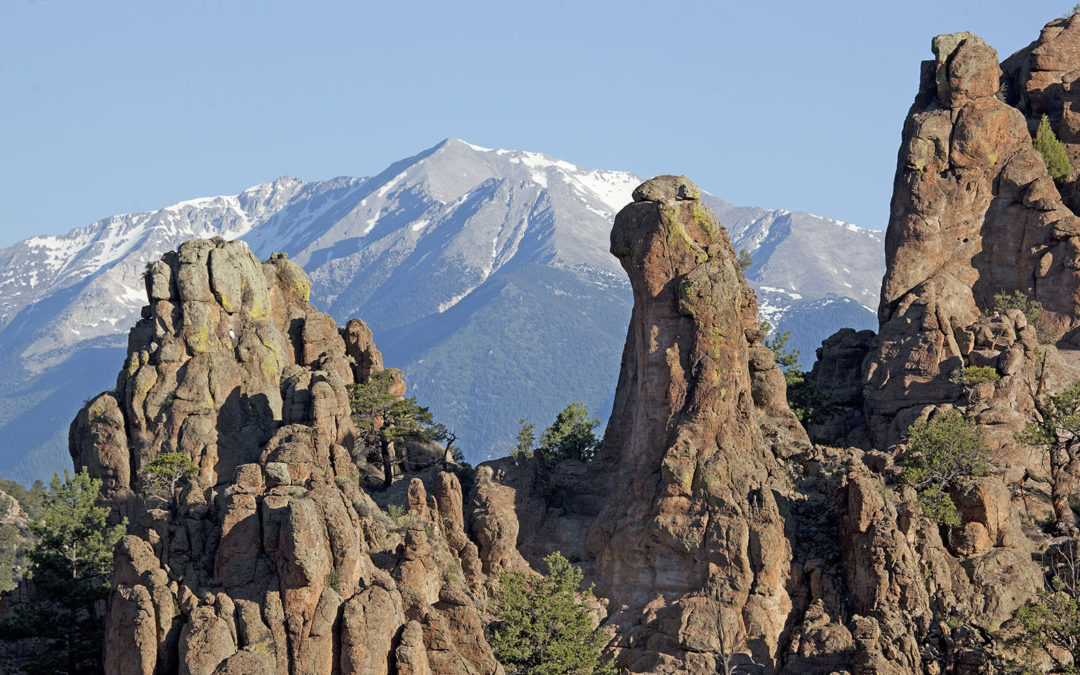
Colorado’s public lands belong to all of us. From Browns Canyon National Monument to the roadless forests and desert landscapes of the American West, these lands provide important wildlife habitat, clean air and water, abundant recreation opportunities and economic benefits for communities.
They are held in trust for future generations and managed for multiple uses by all Americans. Yet the protections that safeguard these lands and their multiple-use mandate are under attack. Browns Canyon National Monument illustrates what’s at stake. Our local national monument protects the nation’s most popular whitewater destination, Gold Medal trout waters, critical big-game habitat, priceless cultural resources and a treasured landscape.
But just last year, Browns Canyon landed on a federal list created under an executive order to review the boundaries of several national monuments. This review could result in downsizing or even eliminating these national monuments.
At the same time, broader attacks on public lands are unfolding across the country. One of the most worrisome examples is the recent repeal of the Bureau of Land Management’s Public Lands Rule. Adopted after extensive public input, the rule recognized that conservation, recreation, local communities, environmental restoration and cultural resource protection are legitimate uses of public lands alongside commercial and industrial uses.
More than 130,000 public comments responding to the repeal were submitted, with 98% supporting the rule. Its repeal tips the scales in favor of private and corporate interests at the expense of public interests – wildlife, public access, recreation and conservation values that enjoy broad support across the USA.
Efforts are also underway to rescind the Roadless Area Conservation Rule, which has protected 45 million acres of pristine national forest lands since 2001. These roadless areas protect biodiversity, clean water, clean air, hunting and fishing opportunities and backcountry recreation. Despite claims that more roads are needed for wildfire management, the exact opposite is true. Extensive data shows that 90% of all wildfires start within half a mile of a road.
More public comments were submitted last year after the Roadless Rule rescission was announced. More than 99% of those comments opposed rescinding the rule. In the face of overwhelming support for the rule, Sen. Mike Lee of Utah is still attempting to bypass the established rulemaking process by adding the Roadless Rule Nullification rider to the Wildfire Prevention Act, which has advanced to the Senate floor.
Meanwhile, federal land-management agencies are being weakened through staffing cuts and organizational upheaval. These impacts are already being felt locally. Browns Canyon National Monument recently lost both its longtime BLM and U.S. Forest Service managers. Across the country, all Forest Service regional offices are being eliminated along with 75% of the agency’s research facilities.
This creates a dangerous cycle. Gut land-management agencies, thereby reducing their ability to manage public lands effectively; then, point to ineffective management as justification for transferring or selling public lands. During debate over a federal budget reconciliation package last year, Senate Republicans championed a rider to sell 3 million acres of federal public lands. The proposal was removed following fierce pushback from over 100 environmental, outdoor recreation and hunting and fishing organizations. This threat demonstrated how quickly long-standing safeguards to our public lands can be undermined.
Public lands were never intended to serve a single interest. They are meant to balance multiple values: recreation, wildlife, clean air and water, cultural and historic resources, grazing, resource development and local economies. While reasonable people may disagree about where that balance should be struck, most Americans agree that public lands should remain public.
Browns Canyon National Monument exists today because local citizens, businesses, sportsmen, conservationists and elected officials came together around a shared vision. That same spirit is needed now.
The future of Browns Canyon – and public lands across the West – depends on citizens speaking up and reminding decision-makers that these lands belong to all Americans. Once public lands are sold and fragmented, the ecosystems they protect will be lost or seriously diminished. We owe future generations the same opportunity to experience free-flowing rivers, healthy wildlife populations and inspiring landscapes that previous generations protected for us. The time to defend our public lands is now.
Michael Kunkel is co-founder and president of Friends of Browns Canyon, and John Sztukowski is co-executive director/conservation director of Wild Connections.
Op-ed originally appeared in The Mountain Mail. July 5, 2026.